The research behind Adelaide The White Eagle
The story of Adelaide the White Eagle grew directly from family research. On my mother’s side the line runs through the Scottish Drummonds who settled in Madeira, linking the Scottish and Portuguese threads of the ancestry. Following the records further led through Hungary and into the early Piast dynasty of Poland.
In the family tree, Adelajda ‘The White’ Piast appears as the daughter of Siemomysł (Ziemomysł) Piast and Gorka, and therefore as the sister of Mieszko I, Duke of the Polans.
Medieval sources, including the Annales Kamenzenses and the Kronika Węgiersko-Polska, refer to her in the same way—as “sororem Meschonis,” sister of Mieszko. She married Mihály (Michael) of the Árpád dynasty of Hungary in the mid-tenth century. Their line continued through their son Vazul and into the Hungarian royal house.
This connection is recorded in the tree I have been building, and it is the historical thread that gave the book its name and its central figure. Adelaide is treated as a real ancestor in the research, even though later historians sometimes debate the precise details of her life and marriages. The records as they stand show a Polish princess of the early Piast house marrying into the Hungarian line, and that is the path that reaches my own family.
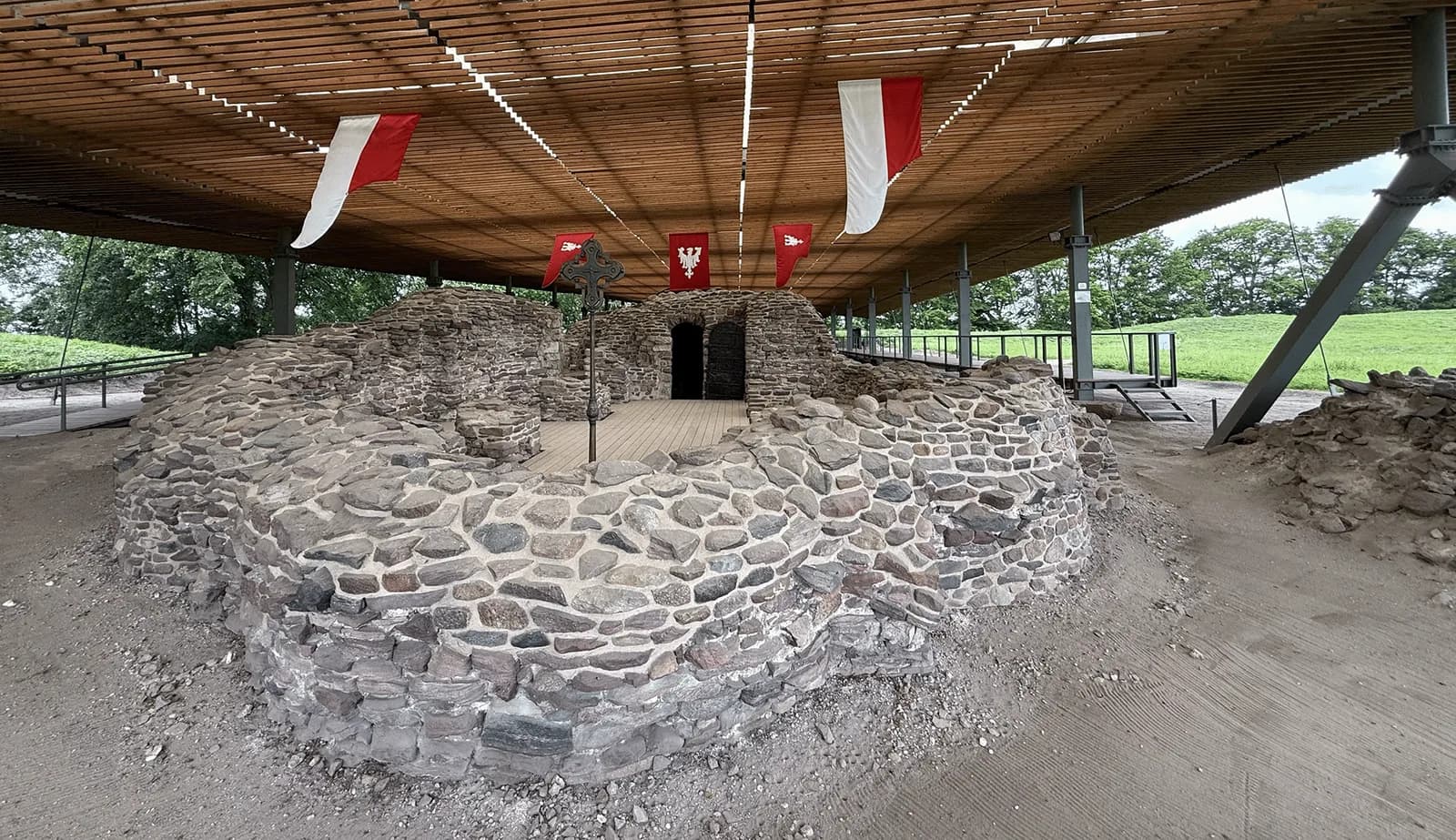
To understand the world she left, I travelled to Poland and walked the island of Ostrów Lednicki on Lake Lednica. The site holds the remains of an early Piast stronghold and palatium associated with the court of her brother Mieszko I. Standing on the island made the written records tangible. The landscape, the quiet ruins, and the sense of the tenth-century court gave a physical place to the name that had appeared in the family tree.
The research therefore joined three strands: the Drummonds of Madeira on the Scottish–Portuguese side, the Hungarian Árpád line, and the Polish Piast princess who married into it.
Adelaide the White Eagle is fiction, but every major choice in the story was shaped by that documented path and by the day spent on Ostrów Lednicki. The book is my way of following the records to their living ground and imagining the woman who crossed from one court to another.